
My top 6 yoga poses for energy and calm
You’re running on cups of tea and five-minute windows between nappies, playtime and bedtime. Some days you need a quick energy reboot; other days you need ten calm minutes to steady a frayed nervous system. Below are six simple, effective poses you can do in about five breaths each with gentle postpartum options and household props (yes, a kids’ puzzle box counts!), so nothing gets in the way.
How to use this: Aim for about 5 slow, steady breaths in each pose (inhale for a comfortable count, exhale long). Move mindfully; if anything feels sharp, ease back. For postpartum mums, prioritise core support and avoid deep compression of the abdomen or pelvic discomfort (see the modifications).
Top 3 energising poses:
1) Chair Pose — Wake up the whole body.
Why: Builds heat, steadies legs and focus - great for when you’re running low on energy.
How: Stand with feet hip-width, inhale arms up, sit the hips back like you’re lowering into a chair. Keep weight in heels and chest lifted. Draw the tummy in towards the spine to create a straight back (no arching).
Breath: Five full breaths, soften the face on exhales.
Postpartum modification: Hold the back of a chair or place hands on hips and sit less deep. Squeeze a block or small kids’ puzzle box between the thighs for support and pelvic engagement, if your pelvic floor feels loose. Props: Chair, block, or a heavy toy to squeeze.
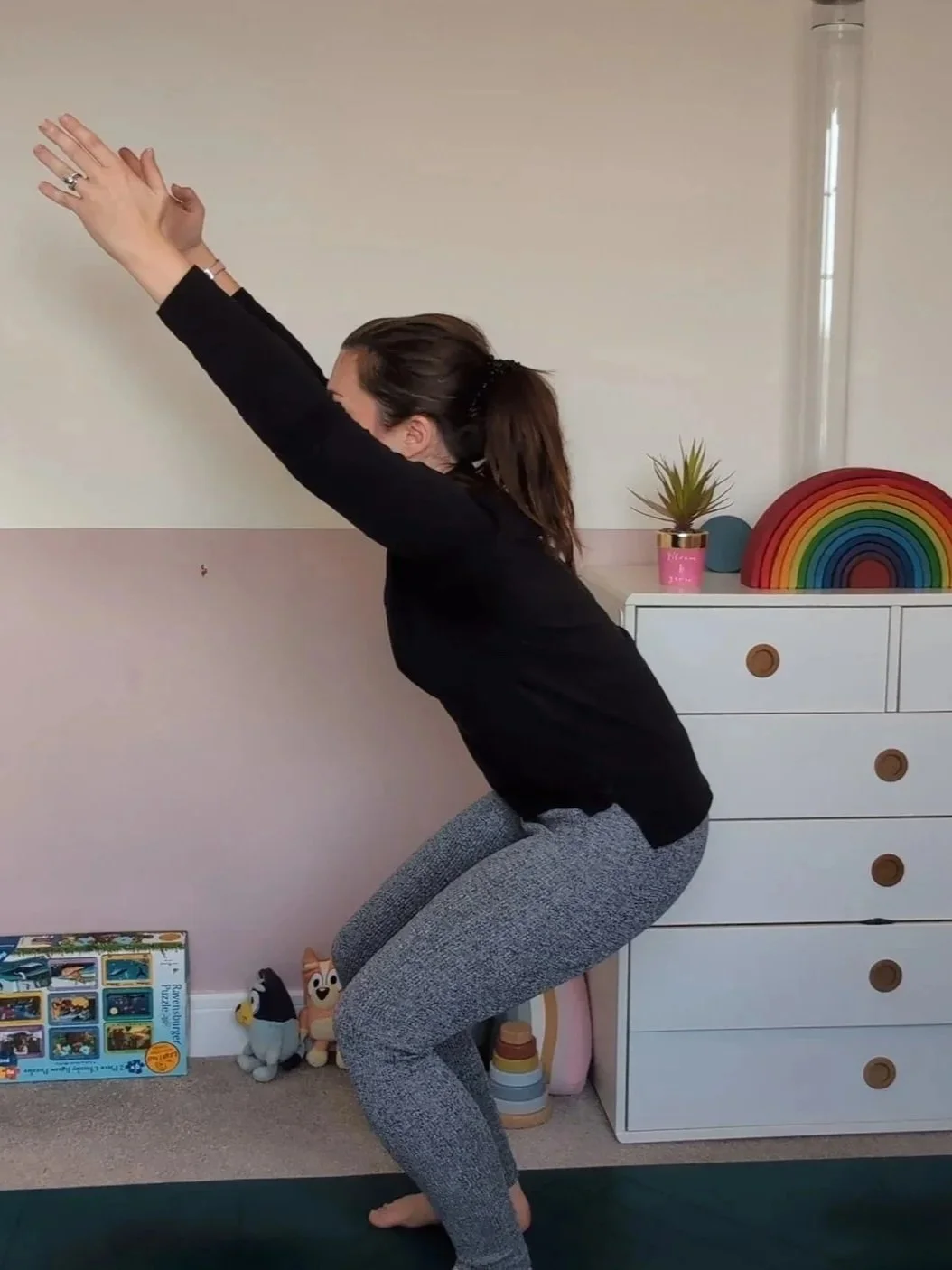
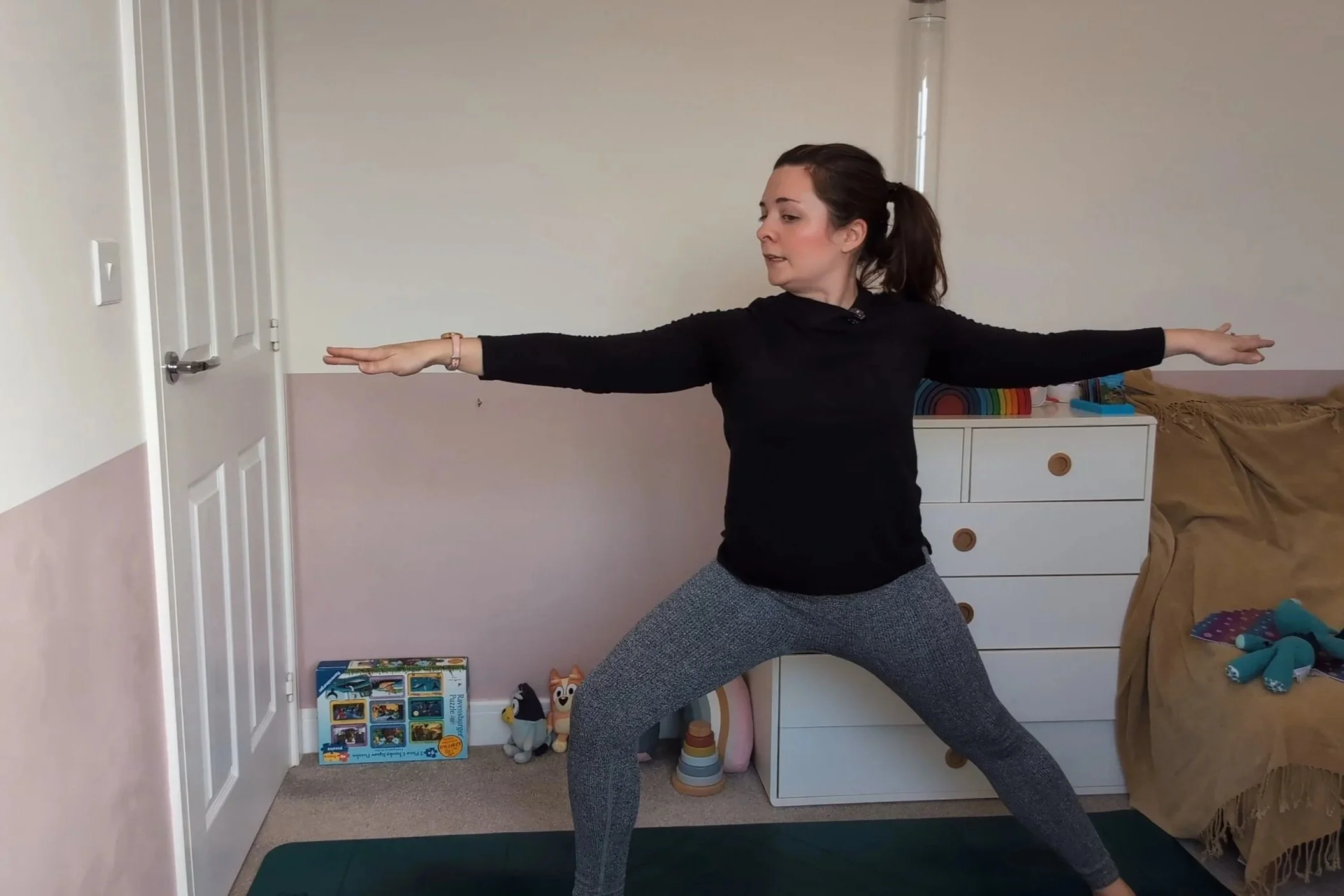
2) Warrior II with dynamic arms — Ground, then mobilise.
Why: Strengthens legs, opens the chest, and the gentle arm movement increases circulation and energy.
How: From wide stance, front knee bent above ankle (90 degrees), back leg strong, arms at shoulder height. On an inhale sweep arms slightly forward and up in line with your ears and straighten the front leg; on exhale, sweep arms back to shoulder height with soft shoulder blades and bend the front knee again. Repeat small, controlled movements for five breaths on each side.
Postpartum modification: Keep the stance narrower and avoid over-arching the lower back. If balance is a concern, practice with back heel against a wall or hands on a chair for support. Props: Wall for balance, or chair if needed.
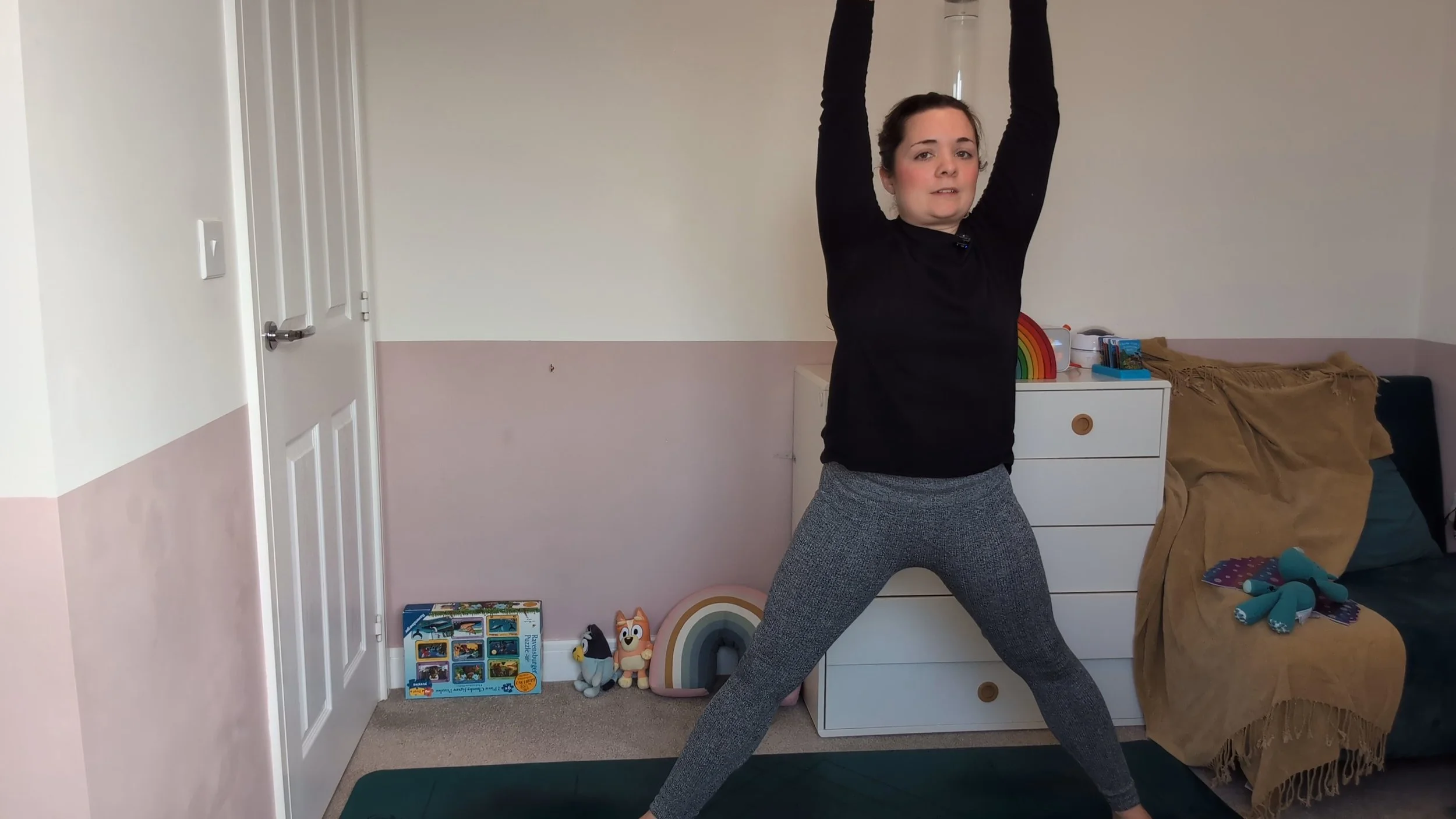
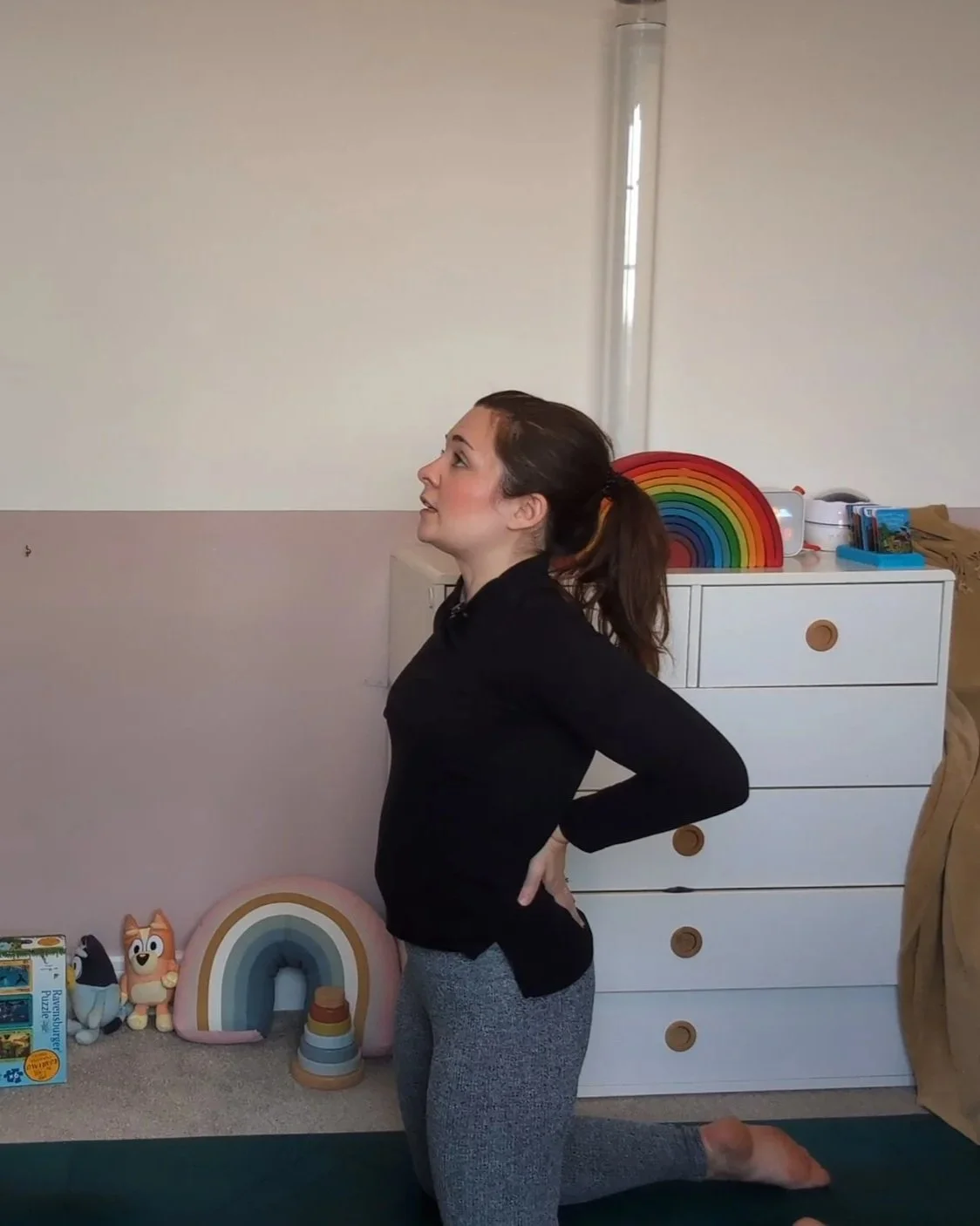
3) Modified Camel (Gentle Backbend) — Open the chest without strain.
Why: Counteracts the forward-folded hours of carrying little ones and lifts energy.
How: Kneel with knees hip-width. Place hands on lower back (fingertips down) and gently draw the chest up, keeping a soft neck. Squeeze the elbows inwards slightly to open chest further and contract the shoulder blade. Think length before depth.
Breath: Five slow breaths, keeping the belly supported.
Postpartum modification: Keep hands on the sacrum or lower ribs. Place a folded blanket under the knees for cushioning and avoid deep backbends if you have abdominal separation; focus on thoracic (upper back) openness instead. Props: Blanket under knees, wall nearby for reassurance.
Top 3 calming poses:
1) Child’s Pose — Reset and soften.
Why: Instant nervous-system down-regulation and shoulder release.
How: From kneeling, sit back on heels and fold forward, forehead to the mat or a folded blanket. Arms can be forward or by your sides.
Breath: Five slow, easy breaths, long exhales.
Postpartum modification: Widen the knees for belly comfort. Place a pillow under the chest or forehead if needed. If knees are sensitive, sit on a folded blanket. Props: Blanket or pillow.

2) Reclined Butterfly — Gentle pelvic and heart release.
Why: Calms the nervous system and soothes the hips - great for a low-energy evening.
How: Lie on your back, soles together, knees wide. Support each knee with a rolled blanket or block. Rest hands on belly.
Breath: Five breaths, noticing the rise and fall of the belly.
Postpartum modification: Keep hips supported with a bolster or thick blanket and place a small pillow under the head. If lying flat is uncomfortable after a C-section, keep knees hugged and do a supported savasana instead. Props: Bolster, rolled blanket.

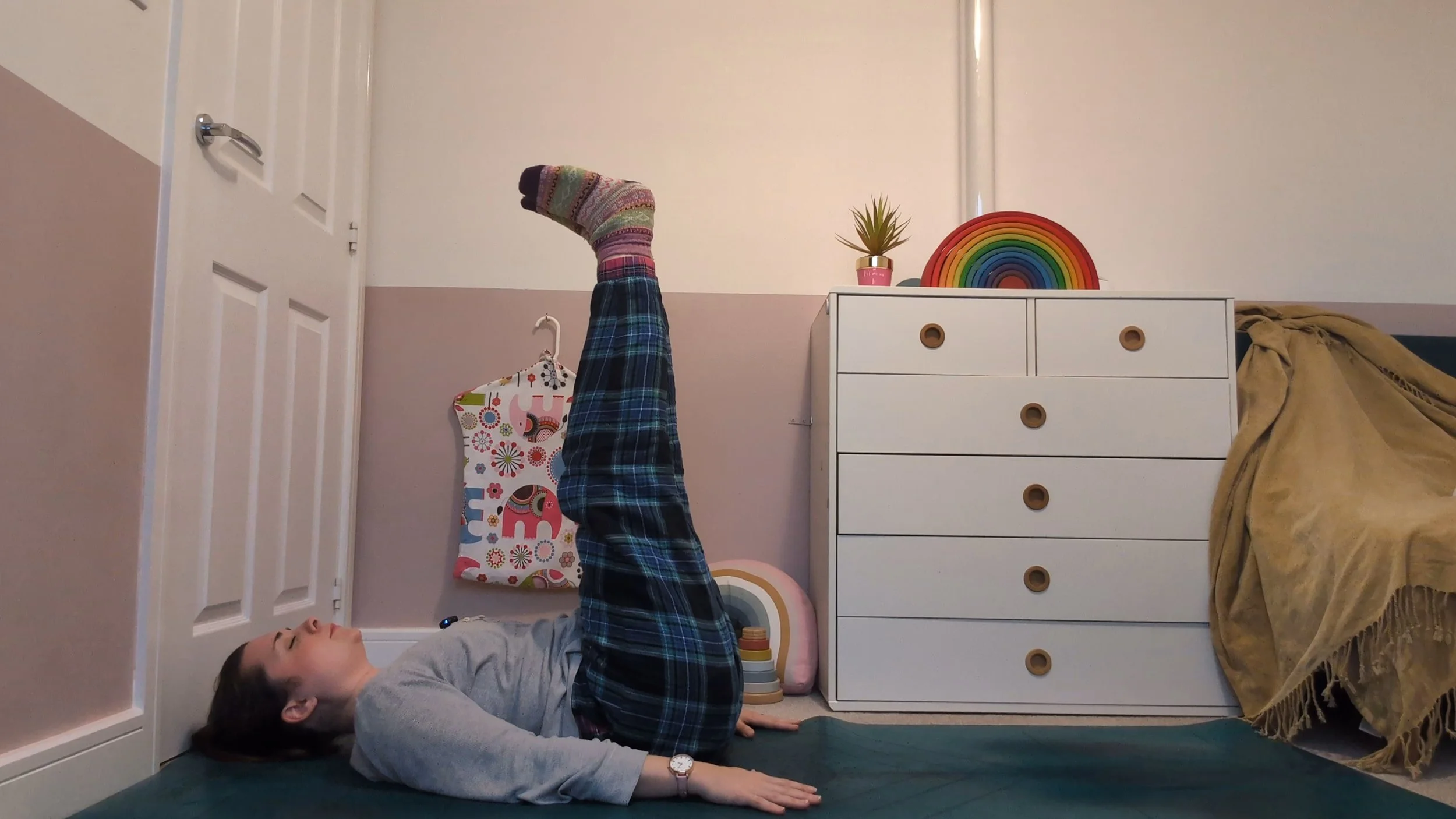
3) Legs Up the Wall — Gentle inversion for calm.
Why: Reduces leg fatigue, helps circulation, and quiets the mind.
How: Scoot hips close to the wall and extend legs up. Rest arms by your sides, palms down. Close eyes.
Breath: Five long breaths, allow the belly to soften.
Postpartum modification: Place a folded blanket under the hips to reduce pressure on the lower back and pelvic floor. Keep knees slightly bent if hamstrings are tight. Props: Wall / sofa edge, folded blanket under hips.
Mini sequence idea (10 minutes) — Start in Child’s Pose — 5 breaths — Come to Chair Pose — 5 breaths (energise) — Warrior II each side with dynamic arms — 5 breaths per side — Modified Camel or chest-opener — 5 breaths — Finish with Reclined Butterfly or Legs Up the Wall — 5–10 breaths.
A quick note for postpartum mums: Follow your body’s cues. If you’re working through diastasis recti or pelvic floor recovery, prioritise neutral spine, smaller ranges, and core support. When in doubt, choose the gentler variation.
Want a short, guided practice you can do and micro movements you can weave into your day to help find calm? Start my free 3-day series, “Calm in the Chaos Reset” — including a gentle slow flow and real life micro movements videos and a short PDF guide with tools to help you feel a little more grounded in the middle of it all, designed for parents with little ones. It’s free, easy to follow between naps, and made for real life. Sign up here to download it and get started.